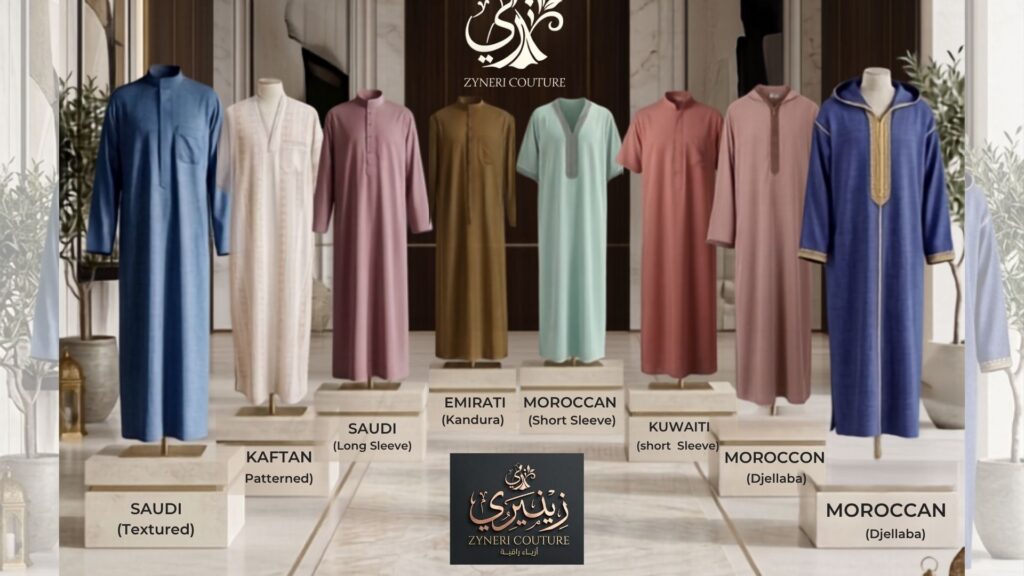
If you’ve ever shopped for a thobe and felt overwhelmed by the names — kandura, dishdasha, jubbah, gandoura — you’re not alone. The thobe is one of the most elegant and meaningful garments in Islamic menswear, but its regional variations can be confusing for first-time buyers.
At Zyneri Couture, we believe every man deserves a thobe that fits his culture, his comfort, and his occasion. So we’ve put together this complete guide answering the most common questions about thobe styles — from collar shapes to sleeve lengths — so you can choose with confidence.
A thobe (also spelled “thawb” or “thobe”) is a traditional ankle-length robe worn by Muslim men across the Middle East and beyond. In South Asian countries, “thobe” can also refer to a jubbah, kurta, or qamis, though these are different from the Gulf-style robe. While the silhouette is similar everywhere — loose, flowing, modest — each Gulf country has developed its own name and design details for the thawb, and these differences are about more than looks; they reflect each region’s culture.
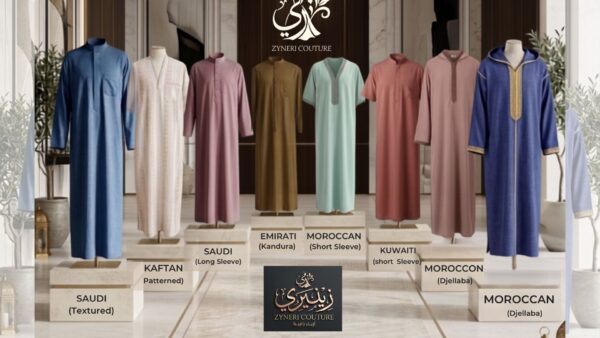
Let’s break down the major styles.
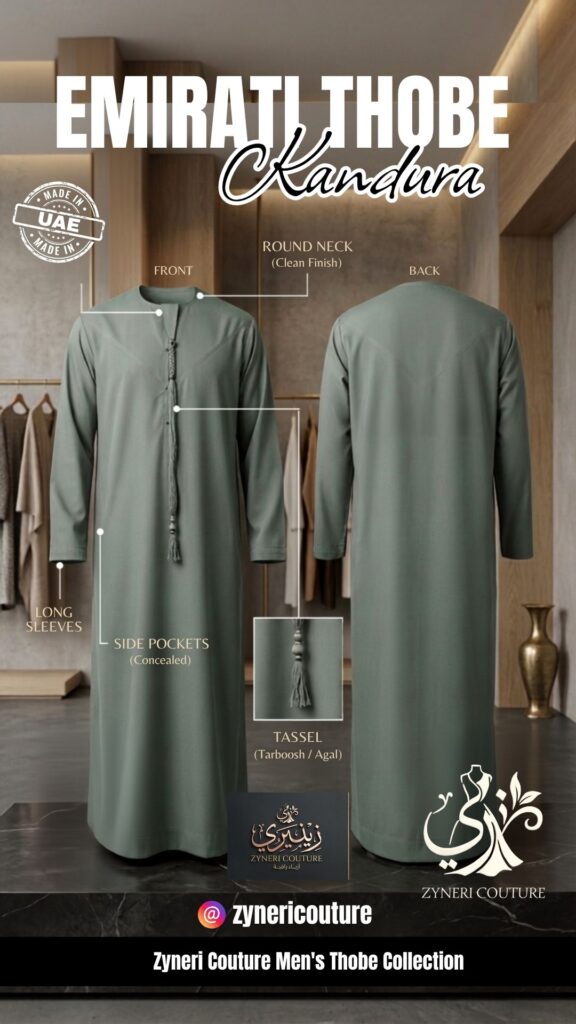
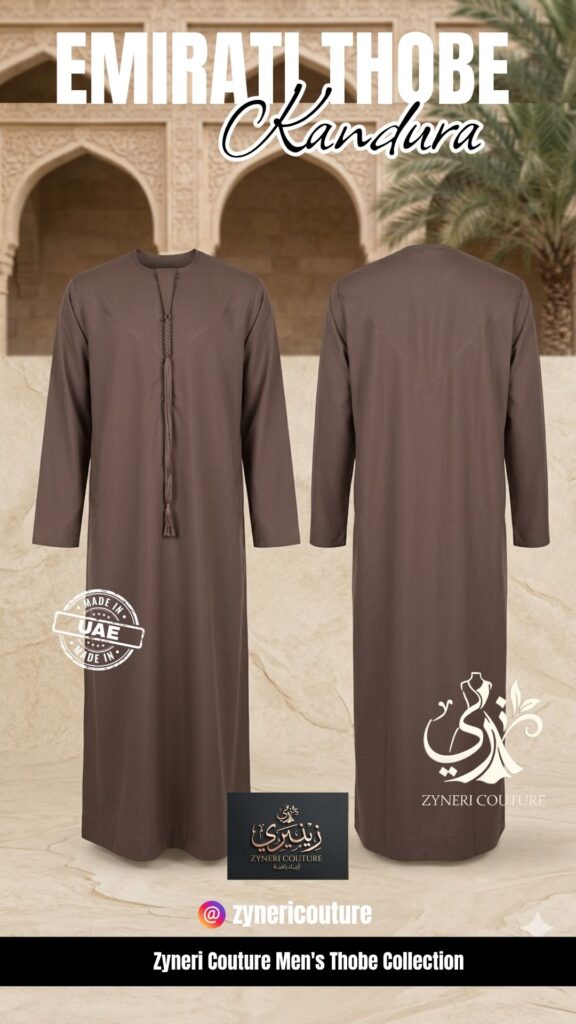
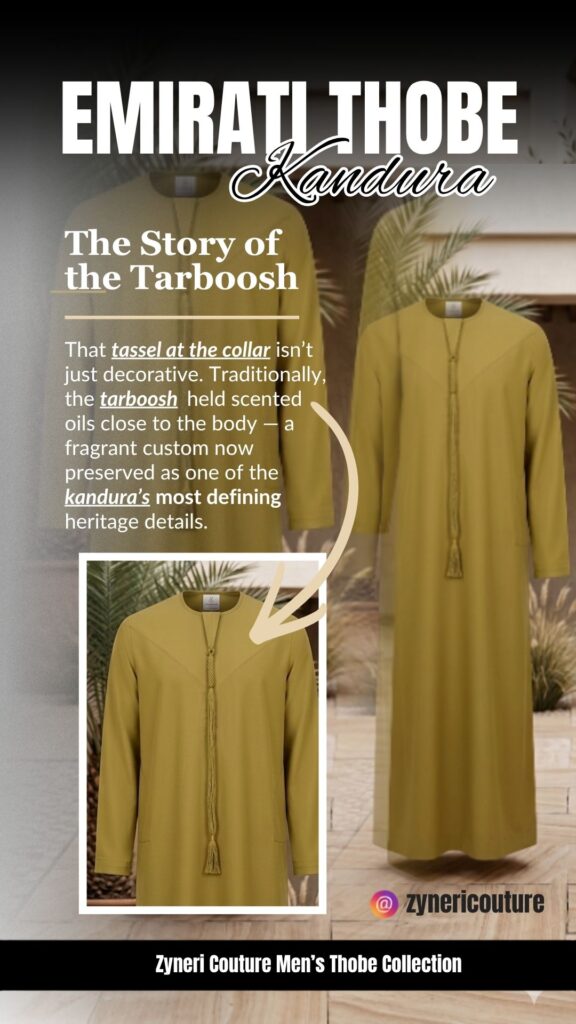
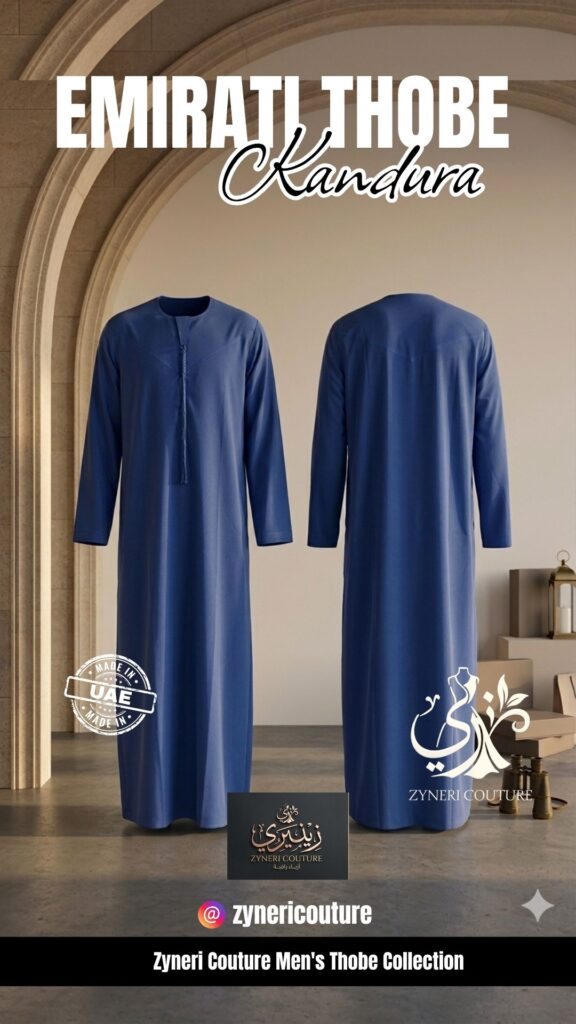
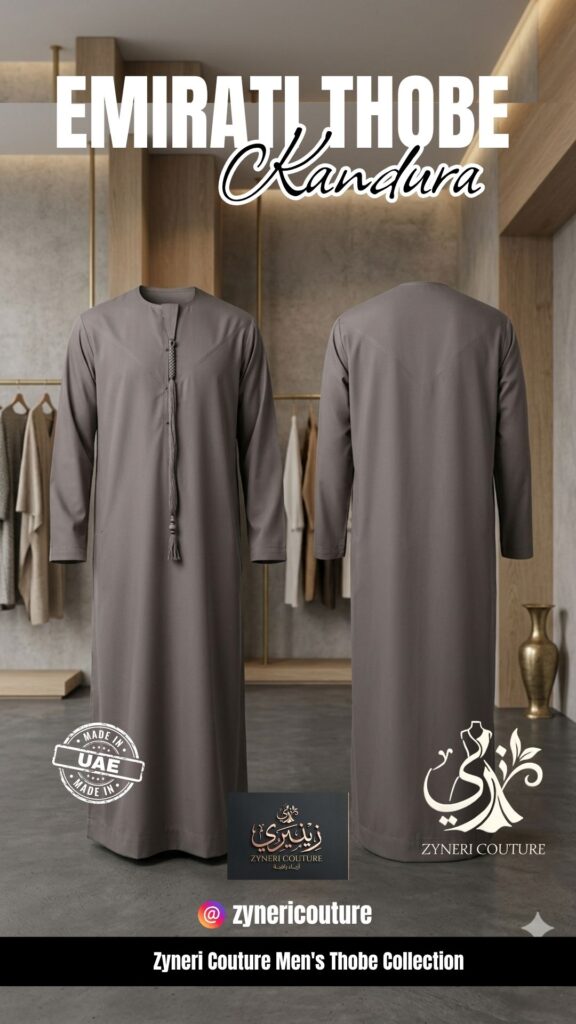
The Emirati kandura is instantly recognisable for its clean, minimalist elegance.
This is the style most associated with the UAE, and it pairs beautifully with a plain white or pastel gutra.
The Saudi thobe brings a more tailored, structured look to the silhouette.
If you want a thobe that feels closer to Western tailoring while staying fully traditional, the Saudi cut is the go-to.
Understated luxury is the hallmark of the Kuwaiti dishdasha.
This is the thobe for men who prefer subtlety over statement — quality speaks for itself.
The Moroccan thobe stands apart from the Gulf styles entirely, leaning into colour and craftsmanship.
If your wardrobe leans toward colour and craftsmanship rather than minimalism, the Moroccan jalabiya is worth exploring.
The Omani style shares the Emirati’s collarless elegance but adds its own signature touch.
A quick way to tell Emirati and Omani thobes apart at a glance: centre tassel = Emirati, side tassel = Omani.
This is one of the most-asked questions we hear, so let’s settle it clearly.
Long-sleeve thobes are the traditional, formal default:
Half-sleeve (short-sleeve) thobes are the modern, everyday alternative:
Our advice: keep one long-sleeve thobe in white or sand for Jummah, Eid, and formal occasions, and one or two half-sleeve thobes in your weekly rotation for comfort and daily wear. This is exactly the kind of versatile, modest wardrobe-building approach we design Zyneri Couture thobes for.
What is the difference between a thobe, kandura, and dishdasha? They refer to the same general garment — a long, loose robe worn by Muslim men — but the name changes by region. Emirati and Omani thobes are also referred to as “kanduras,” while thobes in Bahrain, Kuwait, Oman, and Qatar are frequently called “dishdasha.”
How can I tell an Emirati thobe from an Omani thobe? Look at the tassel. The Emirati thobe’s tassel hangs from the centre of the neckline, while the Omani thobe’s tassel sits to the side. Both styles share the same collarless cut.
Why don’t Emirati and Omani thobes have collars? It’s a defining regional design choice rather than a practical one — the collarless construction creates a clean, streamlined neckline that has become the signature look of both styles.
What fabric is best for a thobe? It depends on climate and occasion. Cotton is popular for everyday wear due to its breathability, linen is lightweight but wrinkles easily and suits summer, polyester blends offer durability and easy maintenance, and wool suits cooler climates.
Are half-sleeve thobes appropriate for prayer? Yes. Half-sleeve thobes are widely worn for daily prayers as long as they meet modest dress requirements — many are specifically designed for everyday wear and Jummah. For Eid or formal congregational prayers, a long-sleeve thobe is the more traditional choice.
What is the best thobe style for weddings or special occasions? For weddings and special occasions, the best thobe should be elegant, high-quality, and well-tailored — typically a long-sleeve Saudi or Emirati style in a premium fabric such as high-thread-count cotton or a silk blend.
Is the Moroccan thobe the same as a djellaba? Closely related. The North African thobe, especially in Morocco, is called a “djellaba,” and the gandoura/jalabiya is a related half-sleeve variation known for its embroidery and colour.
Whether you favour the minimalist elegance of the Emirati kandura, the tailored sharpness of a Saudi thobe, or the colourful craftsmanship of a Moroccan jalabiya, Zyneri Couture brings each style to life with premium fabrics, faceless presentation, and Islamic values at the heart of every design.
Shop the Thobe Collection Now →
Join the Zyneri Couture WhatsApp VIP Group for early access to new thobe drops, exclusive member-only discounts, and styling inspiration delivered straight to your phone.
Sources referenced: NewArabia, YallaWorldX, AlQamees, Life in Saudi Arabia, Al-Haq Thobes, Al-Aniq, Cave London, Alhaya Fashion, Alibaba, Muda Paris, Thobez UK, Jubbas, Modest Essentials, Mens-Thobes.com.